
Explanatory Note: Iran’s Civilizational Role in the Transition from the Stone Age to the Present Era
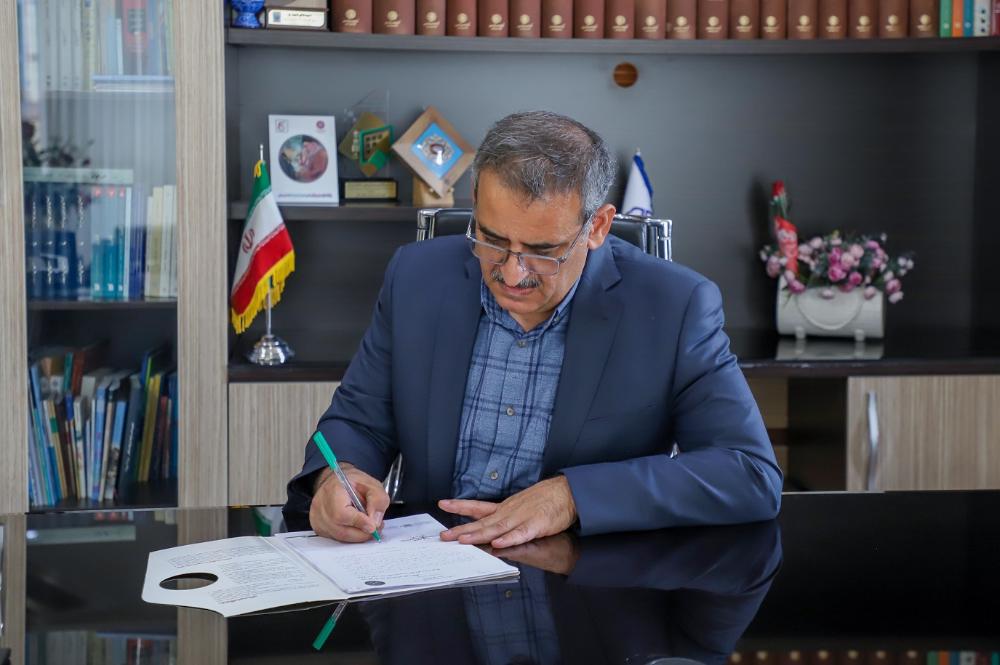



Definitive historical evidence indicates that the world's first comprehensive academic institutions, such as the Gundeshapur complex, were established and developed in ancient Iran over 1,500 years ago, within a civilizational history spanning 12,000 years. These institutions played a foundational role in the establishment of global scientific entities. For centuries, this civilizational framework allowed Iran to serve as a bridge between diverse cultures, becoming the primary global center for the systematic production, translation, and distribution of science and knowledge.
Today, in the age of the information revolution, the global scientific heritage is manifested in complex technological infrastructures, communication networks, and advanced research and development centers. Such scientific achievements and technological equipment are not merely the assets of a single nation or confined to specific geographical borders; rather, they constitute an inseparable part of the common heritage of the international community. Unfortunately, amidst conflicts and security crises, these sensitive ecosystems and vital networks are highly susceptible to vulnerability and destruction. This reality is particularly evident in the recent aggression by the enemies of this land against the sovereignty of our country. Based on the fundamental principles of scientific ethics and international law, the preservation and security of academic and technological infrastructures, as well as research centers—especially in the fields of healthcare and specialized laboratories—must be accepted as an inviolable red line in any conflict. Any damage to them should be regarded as an assault on the collective wisdom of humanity. The destruction of such centers not only halts a nation’s path toward sustainable development but also directly and negatively impacts the pace of technological growth on an international scale. Beyond hardware infrastructure, safeguarding the lives and psychological security of researchers, scientists, and the scientific elite during crises is of paramount importance. In this regard, the necessity for a global treaty and consensus to grant absolute immunity to research and academic infrastructures is felt more than ever. Only under the shadow of such immunity can the continuity of technological innovation be ensured to confront the complex challenges of the future.
It is generally accepted that practical respect for the sanctity of science and technological institutions is a measure of civilization, and no justification for encroaching upon these fundamental pillars is acceptable. Yet, unfortunately, the global community today witnesses that corrupt and infanticidal leaders such as Netanyahu and Trump not only lack such civilizational metrics and have crossed these red lines, but also take pride in doing so. They are oblivious to the fact that the enduring civilizational capacities of this land, famed by the sacred name of Iran, are so immense that following the Arab conquest, it became the center of gravity for Islamic science and civilization. This influence was such that it led invaders to regret their actions; for instance, the Mongol ruler Oljeitu Khan, after plundering Iran and realizing the grandeur of its civilization, altered his spiritual path and chose the name "Khodabandeh" (Servant of God) for himself. Undoubtedly, Iranian culture and civilization played a major role in the transition from the Stone Age to the modern civilizational development of societies and mankind. Therefore, threatening to return the civilized nation of Iran to the Stone Age can only be the product of corrupt minds and regimes trapped within the narrow and decadent confines of their own thoughts, failing to comprehend the civilizational essence of this great nation.
Dr. Adel Sive-se-marde
Faculty Member and
President of the University of Kurdistan


Quick Links
Electronic Services
Useful Links


University of Kurdistan, Pasdaran Boulevard, Sanandaj, Iran

Postal Code: 6617715175

Phone: +988733664600-8

Email: info@uok.ac.ir


site visit
- today:
- yesterday:
- all:
Last Update
20 Apr 2026 - 10:19:48