
A brainstorming session of managers, faculty members, and university experts addressing the challenges of external research projects was held on April 20, 2026, in the President's Office meeting hall.
Brainstorming Meeting of Managers and Faculty Members Centered on Reviewing the Challenges of Research Projects Held
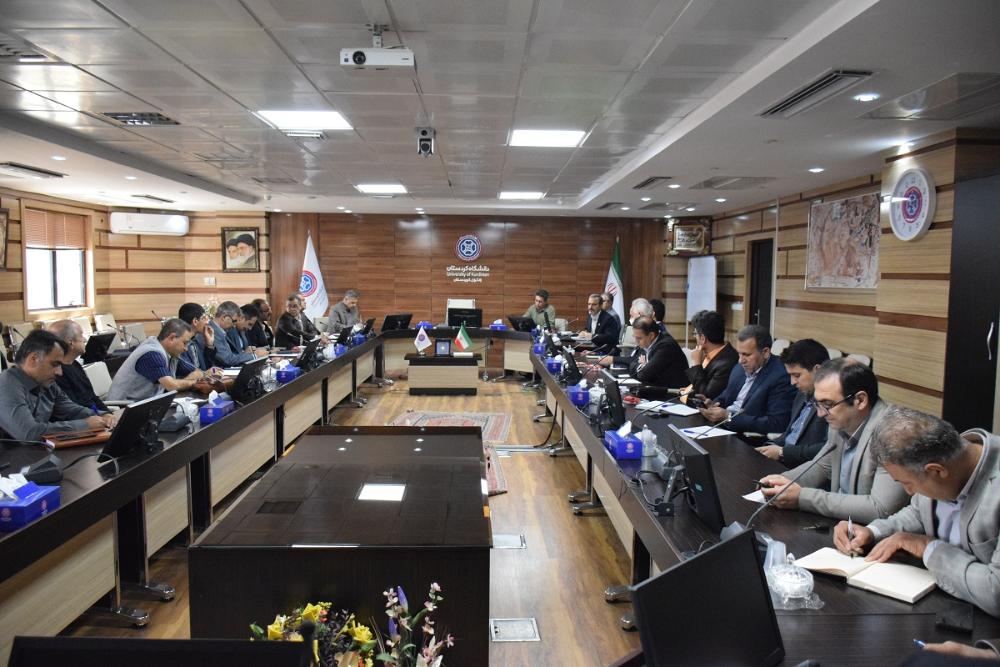



This meeting was organized through the efforts of the Industry and Society Relations Directorate of the University’s Vice Presidency for Research and Innovation, with the extensive attendance of faculty members and relevant experts. At the beginning of the session, Dr. Masoud Ebrahimi, Director of the Center for Industry and Society Relations, while outlining the objectives and agenda of the meeting, emphasized the necessity of developing targeted interactions with society and industry and its role in elevating the university's research standing.
Following this, Dr. Bahramnejad, the University’s Vice President for Research and Innovation, noting the importance of holding such meetings, considered it an effective step towards improving research processes and removing existing obstacles.
In the main segment of the meeting, attendees expressed their viewpoints, experiences, challenges, and proposals in the field of research projects. Among the most critical issues raised were the disproportion between laboratory costs and contract amounts, ambiguity in certain project titles, difficulties related to insurance and tax clearance certificates, the mismatch of allocations with the actual needs of the projects, and administrative complexities from the request stage to final settlement.
Furthermore, emphasis was placed on the necessity of equipping and updating laboratories, compensating for the shortage of laboratory experts, strengthening the university’s connection with industry, fostering greater motivation for faculty members, operationalizing memorandums of understanding, and categorizing research matters into intra-university and extra-university domains.
Subsequently, several proposals were put forward, including leveraging the experiences of successful universities across the country, holding joint meetings with organizations and industrial centers, allocating a portion of overhead revenues to the administrative support of projects, more effectively introducing the university's capabilities to society, appreciating collaborating institutions in the field of internships and practical training, and paying special attention to the principles of research ethics. This meeting concluded its work with a summary of the discussions and an emphasis on following up on the presented solutions.


Quick Links
Electronic Services
Useful Links


University of Kurdistan, Pasdaran Boulevard, Sanandaj, Iran

Postal Code: 6617715175

Phone: +988733664600-8

Email: info@uok.ac.ir


site visit
- today:
- yesterday:
- all:
Last Update
27 Apr 2026 - 11:18:17